Working around racehorses has taught me that no two horses are truly alike. Even when they share a similar build, colour or breeding, each has a distinct presence: a particular way of standing, moving, watching and responding to the world around them.
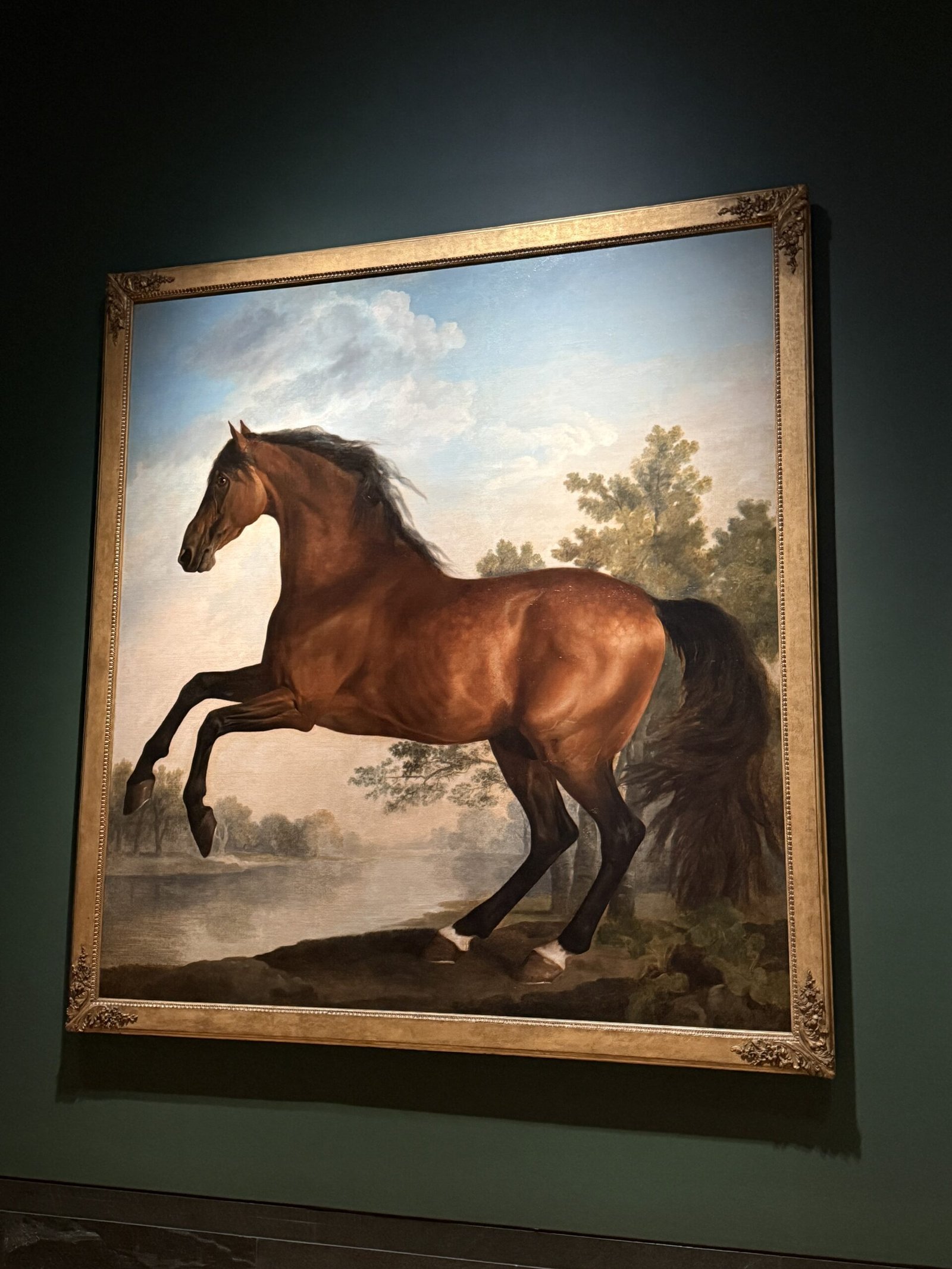
This may be why the National Gallery’s small exhibition Stubbs: Portrait of a Horse felt so compelling to me. Rather than presenting an extensive survey of George Stubbs’s career, the display focused on the concentration, knowledge and curiosity behind his equine paintings. At its centre was Scrub, a Bay Horse Belonging to the Marquess of Rockingham, a monumental portrait rarely seen in public and one of the few life-size equine paintings by Stubbs still held in a private collection.
The exhibition was modest in scale, but it revealed something essential about Stubbs: his horses were not generic symbols of aristocratic status or sporting success. They were individuals, studied with scientific rigour and portrayed with remarkable sensitivity.
From Observation to Anatomy
Stubbs’s extraordinary understanding of the horse was not based on casual observation alone. Between 1756 and 1758, he spent approximately eighteen months at a remote farmhouse in Horkstow, Lincolnshire, dissecting horses and recording their anatomy through detailed drawings. His investigation eventually resulted in The Anatomy of the Horse, published in 1766 and regarded at the time as an exceptionally accurate study of equine anatomy.
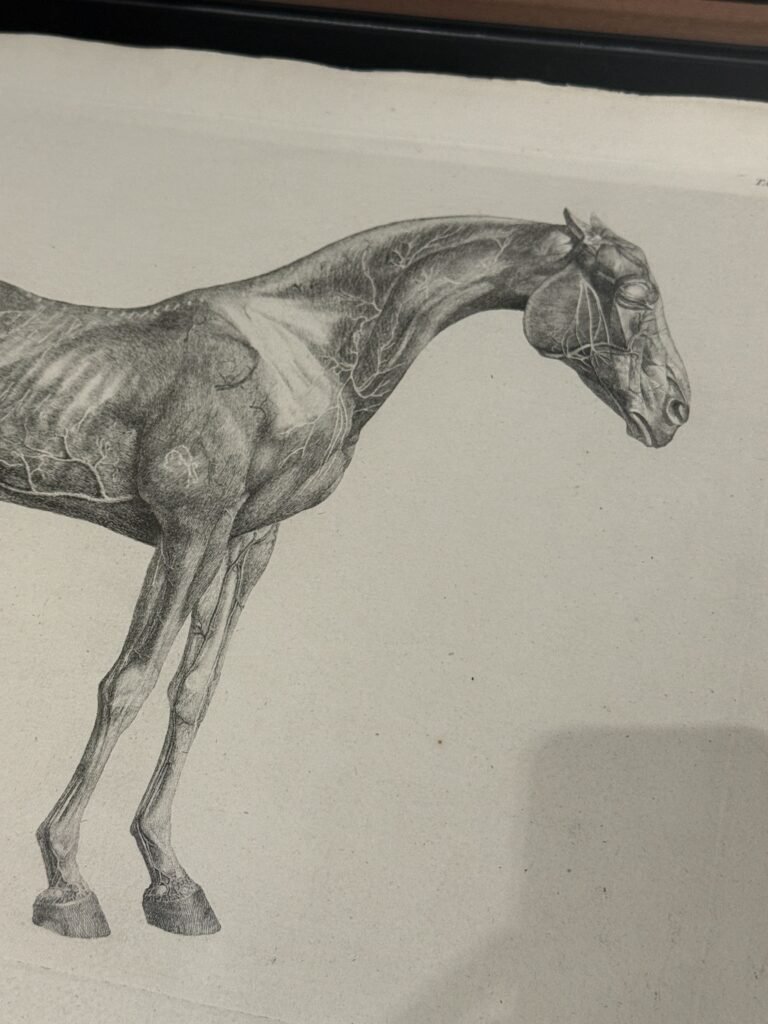
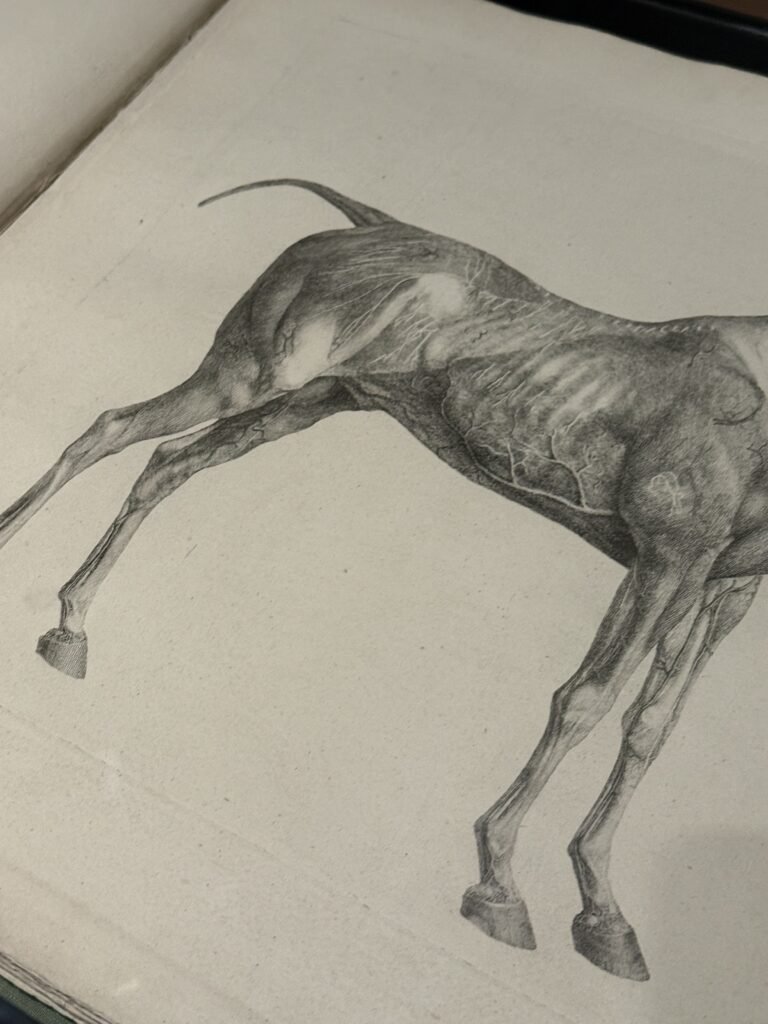
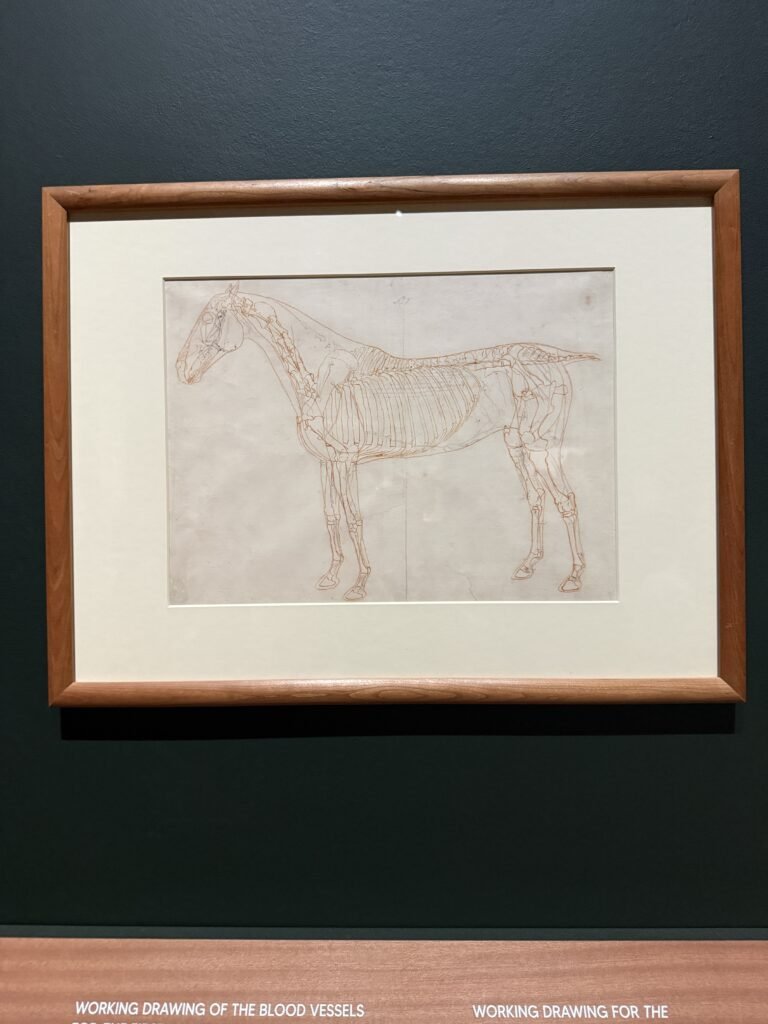
The finished treatise contained more than 50,000 words and eighteen engraved plates illustrating bones, muscles, cartilage, ligaments, blood vessels and other anatomical structures. Unable to secure a professional engraver for the project, Stubbs taught himself how to transfer his drawings onto copper plates.
What impressed me most was the scale of the commitment behind it. This was not simply preparatory research for a series of attractive sporting paintings. Stubbs approached the horse with the curiosity of an anatomist and the patience of an artist who wanted to understand his subject from within.
His drawings were intended to be useful not only to artists, but also to farriers, anatomists and people with a practical knowledge of horses. Art and science were not separate pursuits for him. His anatomical research became the foundation of his visual language.
Scrub: More Than an Equine Type
That knowledge is immediately visible in Scrub, a Bay Horse Belonging to the Marquess of Rockingham, painted around 1762. Scrub had been a successful racehorse, winning eight races before returning to the Marquess of Rockingham’s stud as a stallion.
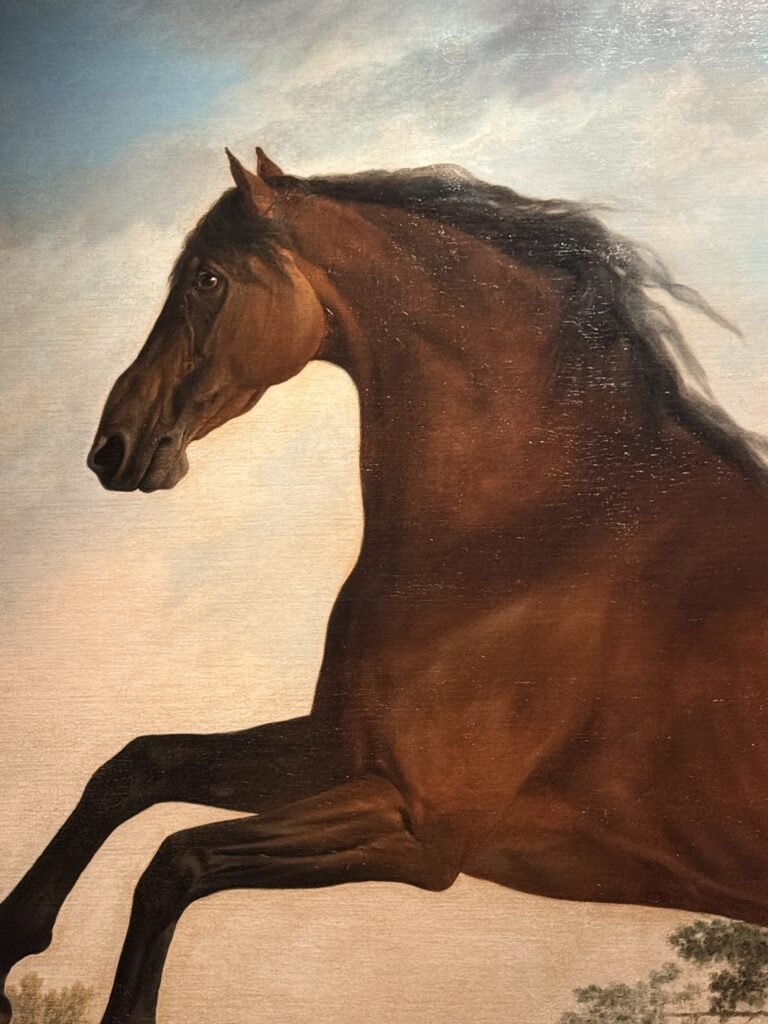
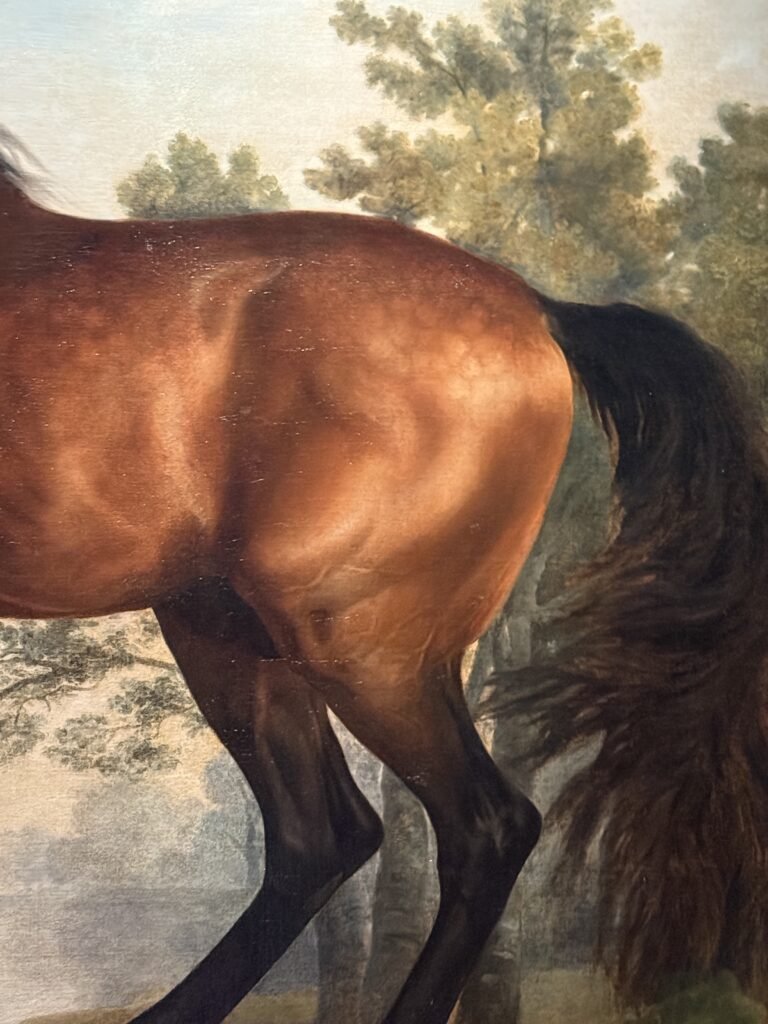
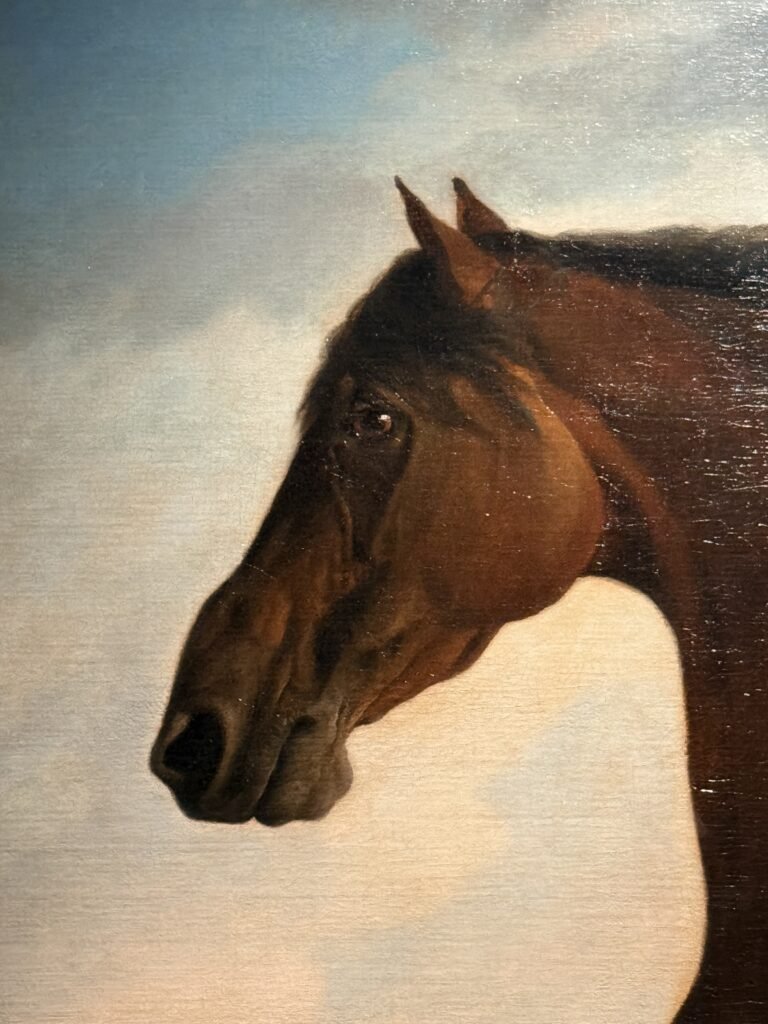
The original intention appears to have been very different from the painting we see today. Scrub may initially have been intended as the mount for an equestrian portrait of King George III, with other artists expected to add the monarch and the landscape. The horse ultimately remained without a rider, while Stubbs later added the landscape himself.
The absence of a human figure is crucial. In conventional equestrian portraiture, the horse often supports the identity and authority of its rider. Here, Scrub becomes the subject in his own right. He is shown rearing, powerful and alert, his anatomy precisely observed but never reduced to a scientific diagram.
The painting demonstrates what made Stubbs so radical. Anatomical accuracy gave him the means to represent the horse convincingly, but accuracy alone was not his final goal. Scrub possesses weight, energy and character. His body is understood structurally, yet he remains vividly alive.
The Marquess ultimately chose not to purchase the large-scale portrait, although this did not end his relationship with Stubbs. The painting remained in the artist’s possession until his death in 1806 and is now rarely displayed publicly.
Looking at Horses as Individuals
This aspect of Stubbs’s work resonates particularly strongly with me because I photograph racehorses as part of my work.
It is easy to describe a horse through measurable characteristics: height, colour, musculature, pedigree or racing record. Yet anyone who spends time around horses knows that these details never tell the whole story. Some carry themselves with confidence; others are watchful, playful, reserved or impatient. The challenge is not simply to reproduce their physical appearance, but to recognise and convey that individual presence.
Stubbs appears to have understood this instinctively. His anatomical studies allowed him to distinguish one horse’s physique from another, but his paintings go further. They suggest temperament as well as structure.
This is especially clear when comparing Scrub with the horses included from Stubbs’s later Turf Project.
The Turf Project
Around 1790, Stubbs was approached by an unidentified patron known as “Mr Turf” to produce a series of paintings representing prominent thoroughbred racehorses from the preceding fifty years. Some were new commissions, while others revisited paintings Stubbs had created earlier in his career.
The project led to the opening of the Turf Gallery in Conduit Street in January 1794, where sixteen paintings were displayed. Stubbs’s son, George Townly Stubbs, was expected to produce prints after the works for wider circulation. The scheme was short-lived, however, and stalled when its funding collapsed later that year.
The project nevertheless reveals the reputation Stubbs had achieved within British racing culture. His patrons valued his ability to record not only the history and breeding of celebrated horses, but also their individual forms.
Mambrino: Beauty, Breeding and Character
Mambrino, dated 1779–93, represents a horse foaled in 1768 who enjoyed a respectable racing career but became even more influential as a stallion. He is remembered as an ancestor of the American Standardbred.
The painting was a later version of a portrait first produced in 1779. According to the Turf Gallery catalogue, Stubbs selected Mambrino because he considered him particularly beautiful and animated as a subject.
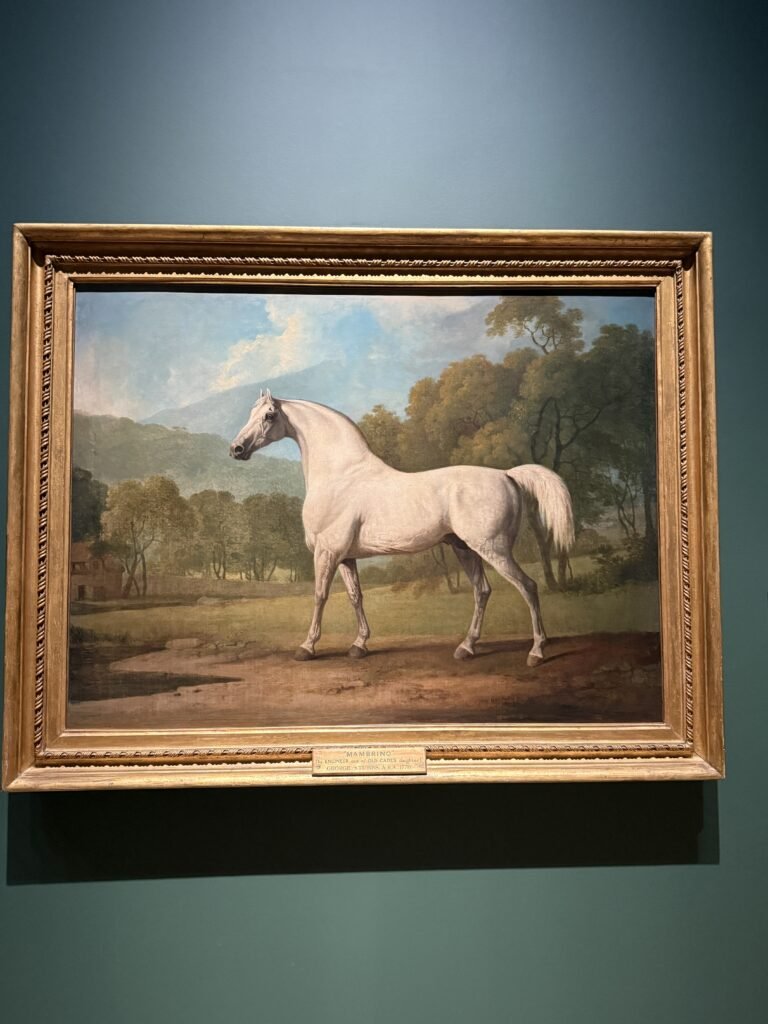
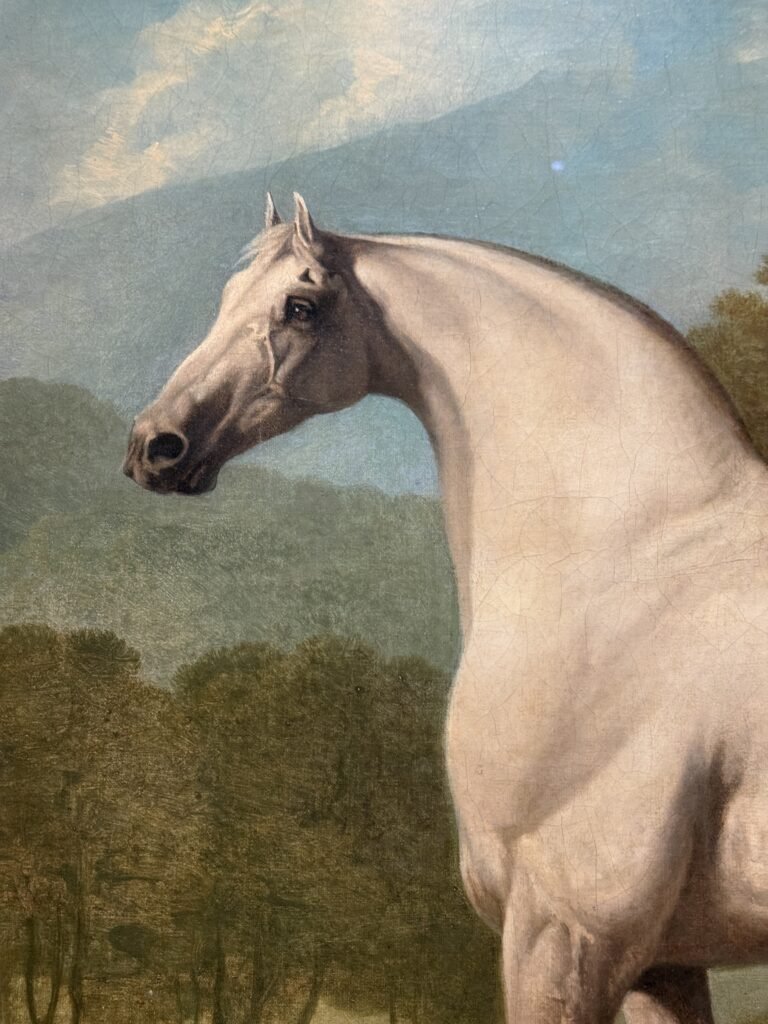
The word animated feels significant. Mambrino is not presented as a static example of ideal equine conformation. Stubbs is interested in the energy contained within the body: the alertness of the head, the tension of the pose and the sense that the horse might move at any moment.
Dungannon and an Unexpected Companion
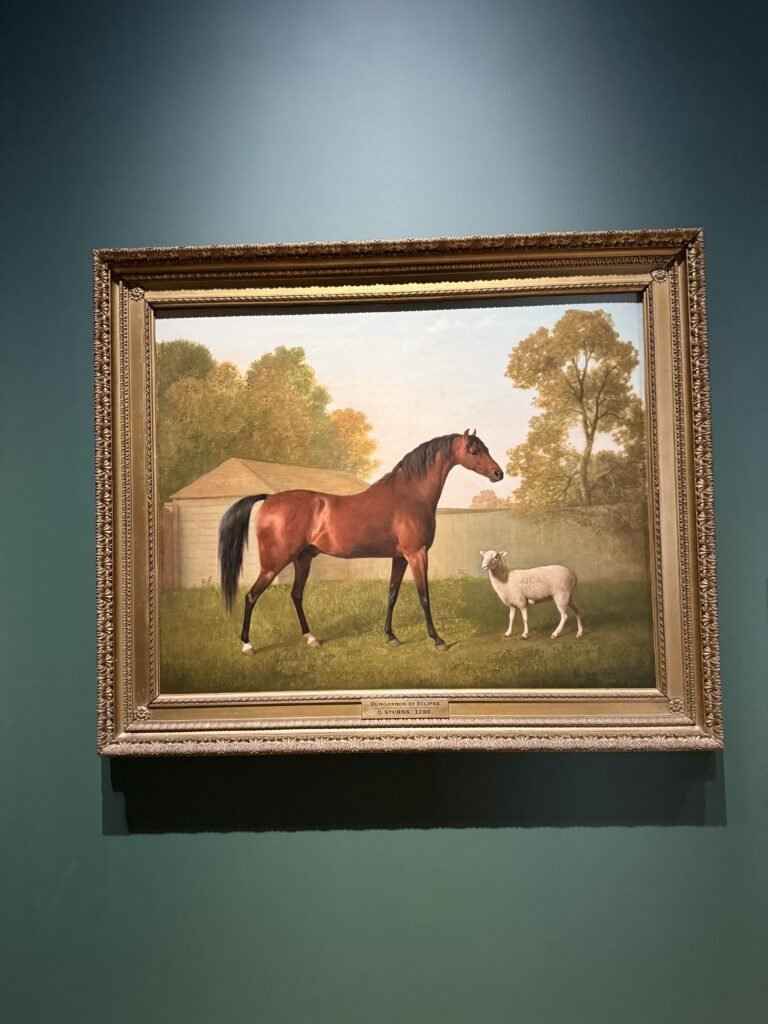
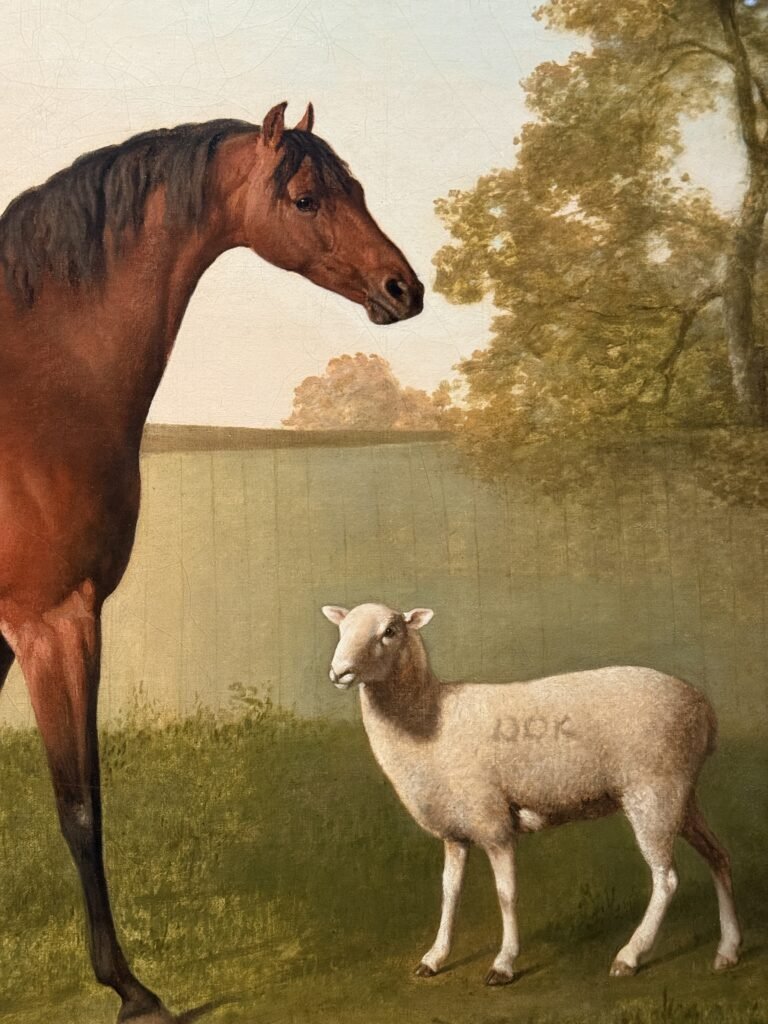
The most charming painting in the display was perhaps Dungannon with a Lamb of 1793.
Dungannon, foaled in 1780, was a champion racehorse and one of the finest sons of Eclipse, the most celebrated racehorse of the period. Yet Stubbs did not portray him alone in heroic isolation. Beside him stands a small sheep, recording the horse’s reported attachment to an animal that had wandered into his paddock.
The juxtaposition is gently humorous, but it also relates to Stubbs’s interest in comparative anatomy. The substantial body of the racehorse is placed beside the much smaller, softer form of the sheep, encouraging us to compare scale, structure and species.
More importantly, the painting reveals something unexpectedly tender. Dungannon is remembered not solely through his victories or pedigree, but through a relationship. The anecdote transforms a famous racehorse into a recognisable individual.
It is precisely this quality that prevents Stubbs’s work from becoming clinical. He examined animals scientifically, but he never painted them as machines.
A Small Exhibition with a Clear Purpose
Although Stubbs: Portrait of a Horse occupied only one room, its concentrated scale worked in its favour. The exhibition did not attempt to tell the entire story of Stubbs’s long career. Instead, it built a focused argument around three interconnected ideas: anatomical knowledge, artistic observation and individuality.
The inclusion of drawings and The Anatomy of the Horse allowed visitors to understand the labour that preceded the finished paintings. Scrub then demonstrated how that knowledge could be transformed into a monumental portrait, while Mambrino and Dungannon with a Lamb showed Stubbs continuing to explore differences in physique and character later in his life.
The exhibition also raised an interesting curatorial question: how much material is needed to make a convincing argument? In this case, very little. A carefully selected group of works was enough to reveal the consistency of Stubbs’s interests across several decades.
And Then, Whistlejacket
Of course, no visit devoted to Stubbs would feel complete without walking into Room 34 to greet Whistlejacket.
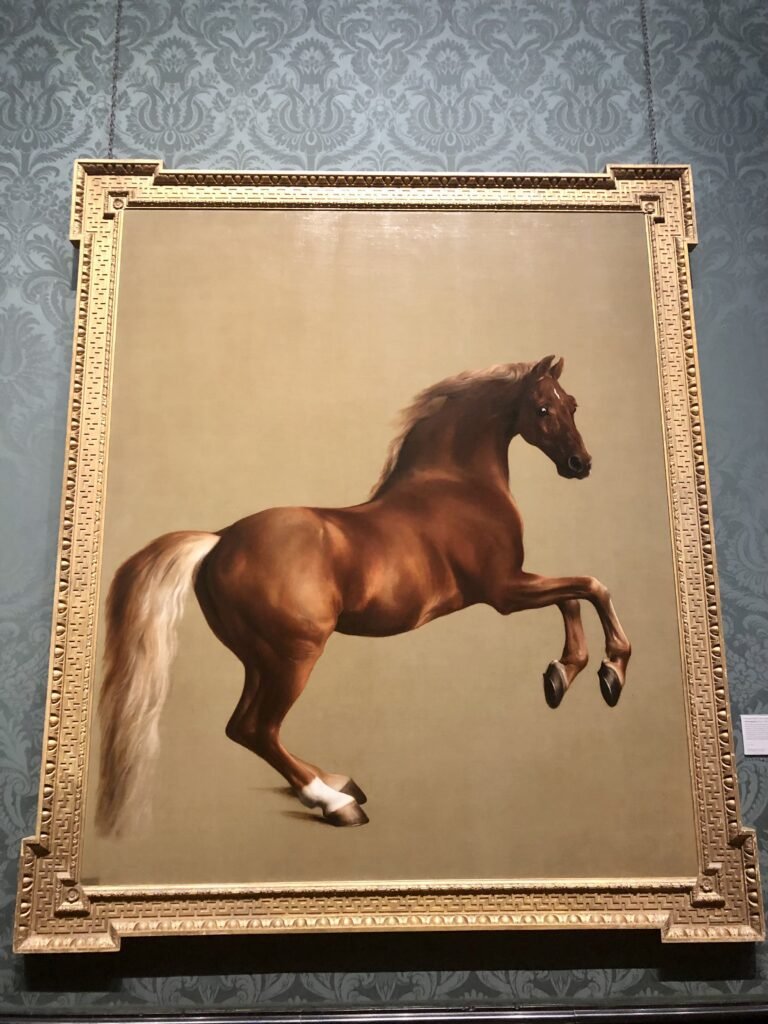
Painted at roughly the same period as Scrub, Whistlejacket is another of the earliest monumental British portraits in which a horse appears without a rider. Unlike Scrub, he is set against a plain background, which makes his presence even more astonishing.
The painting dominates both the room and its entrance. Whistlejacket does not need a rider, an extensive landscape or a narrative setting to justify his scale. He rises against the pale background with such force and elegance that everything around him seems briefly secondary.
After seeing the anatomical drawings and the smaller exhibition, however, I looked at him slightly differently. His beauty no longer appeared effortless. Behind every muscle, joint and movement lay years of observation, dissection, drawing and practical study.
Yet the painting never feels like an anatomical exercise. Whistlejacket is precise, but he is also proud, energetic and magnificently individual.
Observation as a Form of Respect
Stubbs’s achievement lies in the way he brought empirical study and artistic sensitivity together. His knowledge of anatomy allowed him to paint horses with exceptional accuracy, but his attention to individuality gave those bodies presence and character.
For me, the exhibition was a reminder that close observation is more than a technical skill. It can also be a form of respect.
Stubbs looked at horses closely enough to understand how they were constructed, but also patiently enough to recognise that each one was different. Scrub, Mambrino, Dungannon and Whistlejacket are not interchangeable examples of equine beauty. Each occupies the canvas in his own way.
The exhibition may have been small, but it made Stubbs’s passion and intellectual ambition remarkably clear. His horses are scientifically convincing, artistically beautiful and, above all, unmistakably alive.
Further reading
- National Gallery, Stubbs: Portrait of a Horse
- Exhibition Guide
- National Gallery Collection