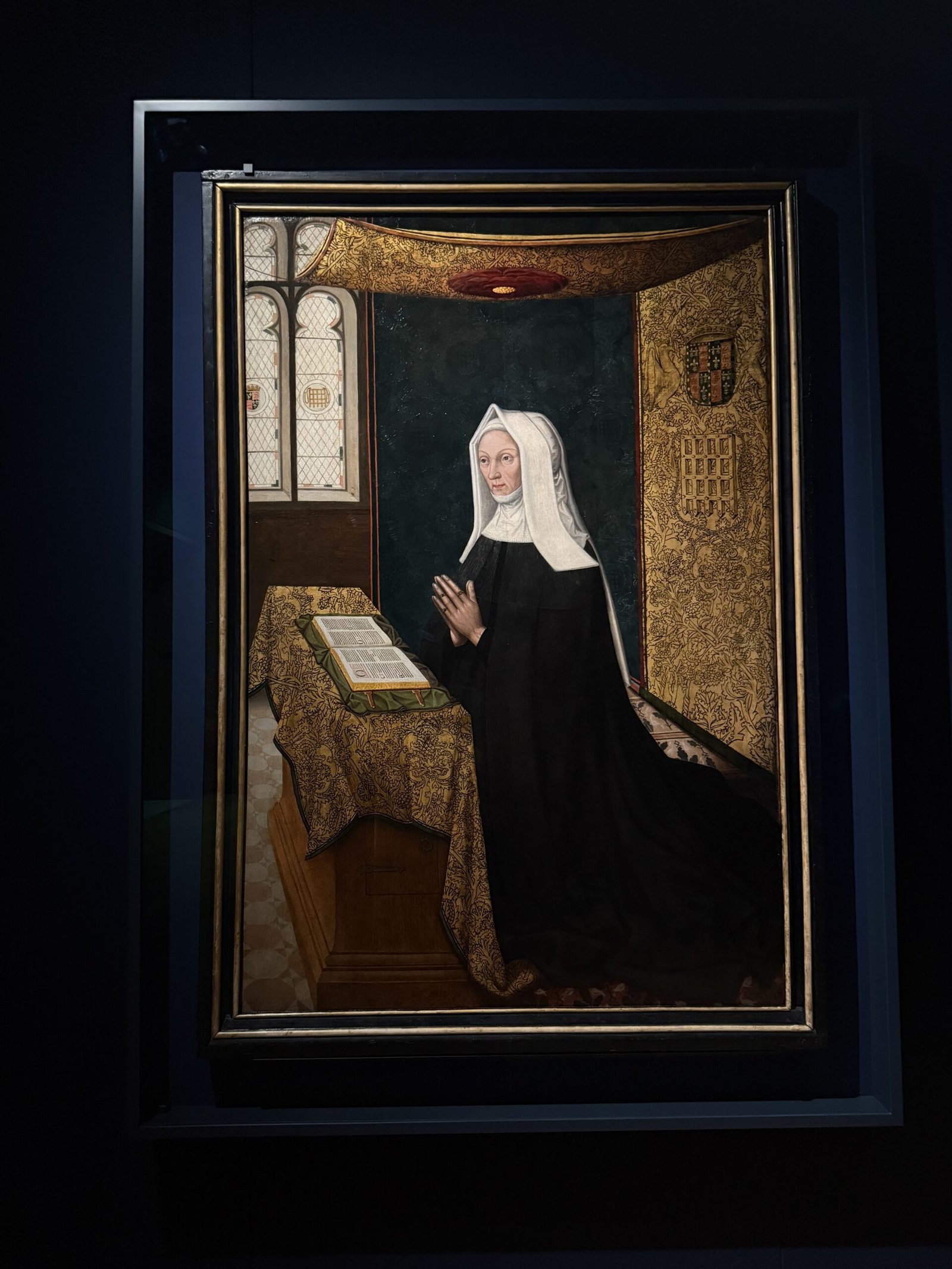
Matriarch of a dynasty, visionary patron of learning, and the formidable architect of Tudor power.
Standing before Pietro Torrigiano’s magnificent gilt-bronze effigy of Lady Margaret Beaufort in Westminster Abbey, one is immediately struck by an arresting paradox. Her hands are raised in perpetual, delicate prayer, yet this serene posture encapsulates one of the most razorsharp political minds of fifteenth-century England. Margaret was never crowned queen. She never sat upon the throne as a reigning monarch. And yet, without her unyielding tenacity, strategic brilliance, and intellectual patronage, the Tudor dynasty would simply not have existed.
As an art historian tracing the physical and archival remnants of the Tudor world, from illuminated manuscripts to funerary monuments, Margaret Beaufort remains one of the most compelling figures in British history. She lived through the violent convulsions of the Wars of the Roses, survived forced marriages as a child bride, gave birth at just thirteen years old to the future King Henry VII, and ultimately orchestrated the unification of warring factions to forge a new imperial era.
Surviving the Storm: The Early Years and Motherhood at Thirteen
Born in 1443 (or 1441) as the great-granddaughter of Edward III through the legitimised Beaufort line, Margaret was a priceless pawn in the dynastic chess matches of late medieval England. Her father, John Beaufort, 1st Duke of Somerset, died when she was a toddler, leaving her as one of the richest heiresses in the realm. At barely seven years old, she was married to John de la Pole, though the union was later annulled. More harrowing still was her marriage in 1455 to Edmund Tudor, Earl of Richmond, half-brother to the unstable King Henry VI. Plunged into the brutal realities of civil war following Edmund’s capture and death from the plague, Margaret, pregnant and isolated, gave birth to her only child, Henry Tudor, at Pembroke Castle in 1457. Her body, severely traumatised by labour at the tender age of thirteen, was left incapable of bearing further children. It was a near-fatal ordeal that forged an unbreakable maternal and political bond between mother and son. When Henry was forced into exile in Brittany following the Yorkist victories, Margaret embarked on a decades-long clandestine campaign of survival, diplomacy, and subversion.
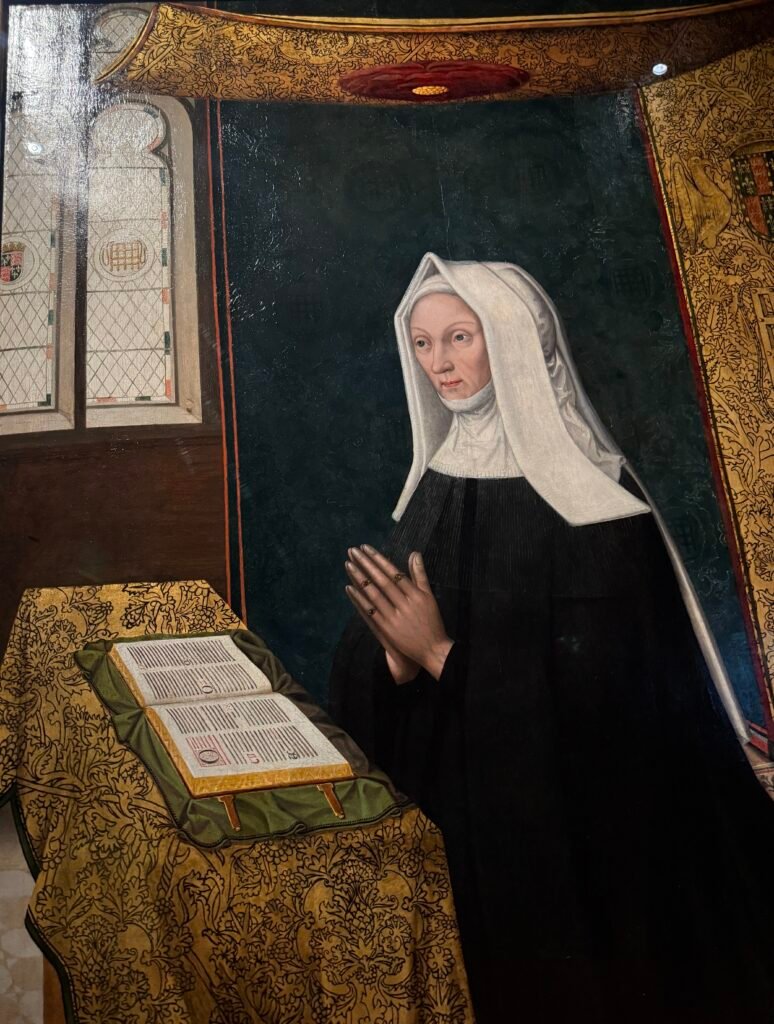
The Mastermind of Bosworth and Royal “My Lady the King’s Mother”
While publicly navigating marriages of convenience to safeguard her estates – most notably to Lord Stanley, whose strategic betrayal at the Battle of Bosworth Field proved decisive – Margaret was quietly engineering the return of the Lancastrian cause. She negotiated with Elizabeth Woodville, pledging that her exiled son would marry Princess Elizabeth of York, thereby uniting the fractured houses of Lancaster and York.
When Henry VII defeated Richard III on 22 August 1485, Margaret secured a unique and unprecedented position at court. As My Lady the King’s Mother, she wielded extraordinary executive authority. She signed official documents with the formidable signature ‘Margaret R.’, deliberately mirroring royal style, and sat as a magistrate in regional courts. A rare surviving letter housed at The National Archives reveals her acute administrative vigilance, detailing local intelligence, patronage requests, and her unyielding oversight of royal affairs. She was, in every practical sense, the power behind the throne.
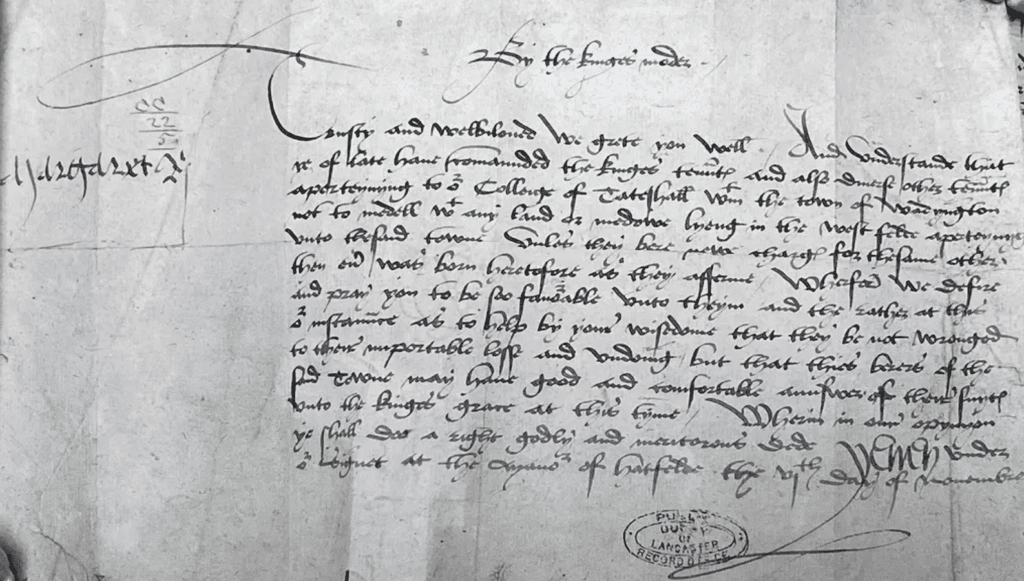
“My Lady the King’s Mother operated not merely as a matriarch, but as a sovereign intellect—navigating the razor’s edge of medieval politics with unmatched strategic foresight.”
Patronage, Piety, and the Renaissance Mind
Beyond high politics, Margaret’s true legacy lies in her profound intellectual and cultural patronage, which bridged the medieval scholastic tradition and the burgeoning English Renaissance. Deeply devout, she translated French devotional texts into English, including the fourth book of the Imitation of Christ, published by William Caxton’s successor, Wynkyn de Worde.
Her educational benefactions reshaped the intellectual landscape of Britain. She endowed Cambridge University with the prestigious Lady Margaret Professorships in Divinity at both Oxford and Cambridge, and founded two of Cambridge’s most illustrious colleges: Christ’s College (1505) and St John’s College (established posthumously in 1511). These foundations were monuments to her belief that spiritual salvation and humanistic learning were inextricably linked.
The Westminster Effigy: Art, Memory, and Eternity
Margaret died on 29 June 1509, just days after witnessing the coronation of her grandson, Henry VIII. She was laid to rest in Westminster Abbey in a magnificent black marble tomb adorned with a gilt-bronze effigy crafted by the Florentine sculptor Pietro Torrigiano, the very sculptor who would later break Michelangelo’s nose in a youthful brawl in Florence.
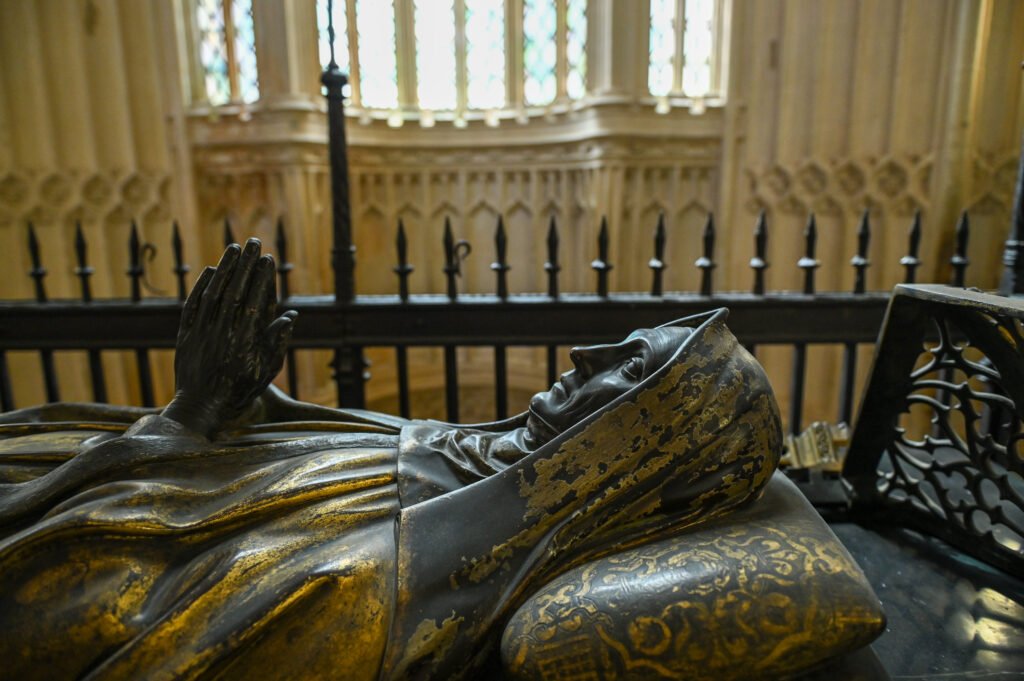
Examining her effigy today offers a poignant masterclass in Renaissance funerary art. Unlike the idealised, static effigies of earlier medieval monarchs, Torrigiano captured a striking sense of individual portraiture: the sharp, aristocratic contours of her face, the quiet dignity of her expression, and the heavy folds of her noble habit as a vowess. It is a work of art that bridges two worlds, the devout medieval asceticism she practiced in life and the Italian Renaissance classicism her grandson’s court would champion.
Lady Margaret Beaufort remains a towering figure: a woman who turned survival into statecraft, and wealth into eternal intellectual legacy. Standing before her tomb in Westminster, one cannot help but acknowledge the true architect of the Tudor age.